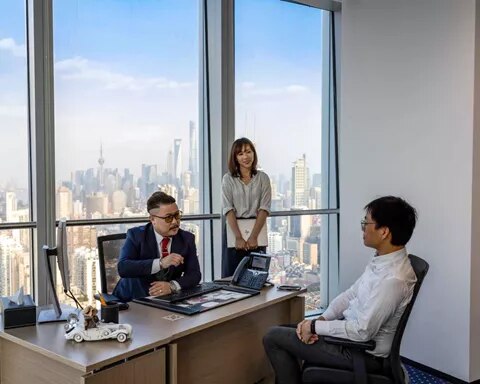
In Beijing’s business environment, business credibility and professional perception often carry weight beyond contracts and credentials. Companies are frequently evaluated by partners, clients, and stakeholders long before commercial discussions begin. Where a business is based, how meetings are hosted, and the level of professionalism conveyed through its environment can quietly shape trust and long-term confidence.
A Serviced Office in Beijing’s Fortune Financial Centre provides international companies with a way to align physical presence with local business expectations while maintaining flexibility and operational efficiency. Operating from a recognised commercial location reflects seriousness, preparedness, and long-term intent, all of which contribute to credibility in Beijing’s commercial landscape.
This article explores how business credibility influences decision-making in Beijing, and why location, meeting environments, and professional presentation remain strategic considerations for companies operating in the capital.
Understanding business reputation and social standing in a modern Beijing context
In Beijing, a business's reputation is shaped not only by its commercial performance but also by how it presents itself in professional settings. In Chinese culture, what is often referred to as “face” relates to credibility, seriousness, and respect within business relationships. For global companies, this concept can be understood as the collective impression formed through behaviour, environment, and attention to detail.
In practice, reputation is reinforced through visible signals. Office location, building quality, meeting etiquette, and the professionalism of reception all contribute to how a business is perceived. These elements help local counterparts assess whether a company is established, reliable, and committed to operating in the market over the long term.
Importantly, this is not about status displays or excess. In Beijing’s commercial environment, thoughtful presentation reflects an understanding of local norms and an awareness of relationship dynamics. Companies that invest in appropriate professional settings often find that discussions progress more smoothly, as initial credibility has already been established through context rather than assertion.
Why office location influences trust in Beijing business relationships
In Beijing, office location often functions as an early trust signal. Long before contracts are discussed, counterparts form assumptions based on where a company chooses to operate. A presence in a recognised commercial district suggests stability, preparedness, and a clear commitment to the market.
This perception matters because many business relationships in Beijing develop gradually. Initial meetings are frequently exploratory, focused on alignment rather than immediate transactions. A well-located office helps remove uncertainty from these early interactions. It signals that the company has invested thoughtfully in its local presence and understands the expectations of doing business in the capital.
Location also affects the practical side of relationship building. Central business districts make meetings easier to arrange and attend, particularly for senior stakeholders whose schedules are tightly managed. Accessibility reduces friction and demonstrates respect for others’ time, which contributes quietly to trust.
For international organisations, selecting an appropriate location is less about visibility and more about alignment. The right address supports credibility, facilitates smoother engagement, and creates an environment where relationships can develop on solid ground.
Meeting environments and perceived professionalism
In Beijing, meetings are not only forums for discussion. They also function as moments where professionalism and intent are evaluated. The setting in which a meeting takes place influences how seriously proposals are received and how committed a company appears to its local relationships.
A well-prepared meeting environment communicates respect. Quiet, well-equipped boardrooms support focused discussion, protect confidentiality, and allow participants to engage without distraction. These details may seem operational, but they contribute directly to how prepared and credible a business appears during critical conversations.
For international companies, access to professional meeting spaces reduces reliance on informal or improvised arrangements. Hosting meetings in a dedicated boardroom signals that discussions are valued and that time has been set aside with intention. This can help establish a more balanced dynamic, particularly when meeting senior local stakeholders.
Within a serviced office setting, businesses can make use of premium boardroom and meeting room facilities as needs arise. This flexibility allows companies to maintain a high standard of presentation without committing to permanent space, supporting both professionalism and operational efficiency.
Balancing cultural expectations with operational flexibility
In Beijing, business credibility is shaped by consistency rather than rigidity. International companies are expected to demonstrate professionalism and preparedness, but this does not require inflexible operating models or long-term structural commitments. Instead, credibility is increasingly associated with how well a business can align presentation, decision-making, and execution as conditions evolve.
A serviced office model supports this alignment by allowing companies to maintain a credible professional presence while retaining flexibility behind the scenes. Operating from a recognised commercial location and hosting meetings in well-appointed environments signals seriousness and reliability, without locking the organisation into permanent space or fixed layouts. This approach works best when supported by a scalable office strategy that allows businesses to adapt space, support, and presentation as operational needs shift.
Operational flexibility also strengthens strategic decision-making. Teams can scale, restructure, or reallocate resources in response to market signals while maintaining a consistent professional image. In this way, business credibility becomes a supporting framework for growth rather than a constraint, aligning local expectations with contemporary, agile business practices.
Reputation, presence, and long-term business outcomes
In Beijing, business credibility is built through a series of signals rather than single actions. Office location, meeting environment, and professional presentation work together to shape how a company is perceived over time. These factors influence whether relationships progress smoothly, discussions move forward with confidence, and long-term cooperation feels viable.
For international organisations, investing in a credible presence does not require rigid commitments. A serviced office approach allows businesses to operate from respected commercial locations, host meetings in professional settings, and adapt space as needs evolve. This flexibility supports both immediate operational requirements and longer-term strategic positioning.
Ultimately, business credibility functions as a form of commercial capital. When managed thoughtfully, it reduces friction, supports trust-building, and creates conditions where partnerships can develop more naturally. In a market like Beijing, where perception and preparation matter, aligning presence with intent remains an important part of sustainable business growth.
Frequently Asked Questions: