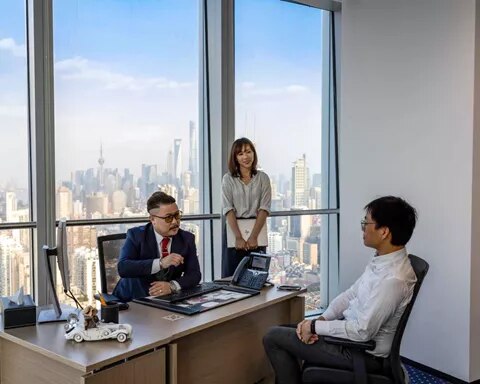
Establishing a business presence in Shanghai’s Lujiazui district can support meaningful engagement with Chinese partners by aligning location, environment, and operational readiness. The district’s commercial profile provides a familiar setting for discussions, while serviced offices offer practical infrastructure that supports professional interaction from the outset.
For companies navigating China’s business landscape, attention to workplace context can contribute to smoother communication and clearer expectations. A well-chosen serviced office allows teams to focus on building relationships, managing projects, and responding efficiently to partner needs. Over time, this consistency helps reinforce trust and supports sustainable collaboration.
Why Lujiazui Matters for Business Partnerships in Shanghai
Lujiazui plays a central role in Shanghai’s commercial landscape, bringing together financial institutions, professional services firms, and regional headquarters within a highly concentrated district. Over time, it has become closely associated with structured business conduct and international commercial exchange.
For companies engaging with Chinese partners, operating in Lujiazui places discussions within a familiar and widely recognised environment. The district’s transport connectivity, proximity to decision makers, and purpose-built office towers reduce friction around logistics and meeting coordination. These practical advantages allow conversations to focus more clearly on commercial objectives.
Business culture is also shaped by the setting. Meetings held in Lujiazui benefit from an atmosphere where formality and preparation are expected. This supports smoother interactions, particularly during the early stages of partnership building. By situating operations in a district known for professional standards, businesses can align their working environment with local expectations while maintaining international operational practices.
Choosing a Serviced Office in Lujiazui
Selecting a serviced office in Lujiazui involves more than comparing floor plans. The surrounding environment, building profile, and operational support all contribute to how a business functions day to day. In this district, many office towers are designed specifically for financial and corporate use, offering a setting that aligns with professional expectations.
Accessibility is a practical advantage. Lujiazui is well connected by metro lines and major road networks, making it convenient for partners travelling from different parts of Shanghai. This ease of access supports punctual meetings and reduces logistical complexity for visiting clients.
Inside the office, serviced solutions provide flexibility without compromising formality. Furnished private offices, professional reception services, and meeting rooms allow teams to operate efficiently from the start. Administrative support and building management services further reduce operational distractions, allowing businesses to focus on relationship development and commercial priorities. For companies entering or expanding in China, this balance of readiness and adaptability can support steady growth within a demanding market.
How Office Environment Supports Partner Engagement
The physical environment where business discussions take place can influence the tone and efficiency of partner engagement. In Lujiazui, serviced offices are typically designed to support formal meetings, confidential discussions, and ongoing collaboration. This creates a setting where conversations can progress without unnecessary distractions.
Meeting rooms equipped with presentation facilities and professional support services help teams communicate clearly. Reception areas provide a structured arrival experience for visiting partners, reinforcing a sense of organisation and preparedness. These details matter in business cultures where first impressions often set expectations for future cooperation.
Beyond meetings, a well-managed office environment supports consistent engagement. Reliable connectivity, on-site assistance, and shared facilities allow teams to respond promptly to partner needs. Over time, this operational stability helps build confidence. Partners are more likely to engage openly when interactions take place in a setting that reflects reliability and respect for professional standards.
A Practical Scenario in Lujiazui
Consider a mid-sized international firm preparing for an initial series of meetings with Chinese partners in Shanghai. By operating from a serviced office in Lujiazui, the company is able to host discussions in a setting that aligns with local business expectations while maintaining familiar operational standards.
Partners arrive at a recognised commercial tower with clear access and professional reception support. Meetings take place in a private room equipped for presentations and document review, allowing discussions to remain focused and efficient. Breaks and informal exchanges occur in shared areas designed for business use, supporting relationship development without disrupting workflow.
After meetings conclude, the local team continues follow-up work from the same location. Administrative assistance, IT support, and meeting facilities remain readily available, helping the business respond promptly to requests. This continuity supports a smoother engagement process and demonstrates consistency, which can be valued when building longer-term working relationships in China.
Conclusion
Establishing a business presence in Shanghai’s Lujiazui district can support meaningful engagement with Chinese partners by aligning location, environment, and operational readiness. The district’s commercial profile provides a familiar setting for discussions, while serviced offices offer practical infrastructure that supports professional interaction from the outset.
For companies navigating China’s business landscape, attention to workplace context can contribute to smoother communication and clearer expectations. A well-chosen serviced office allows teams to focus on building relationships, managing projects, and responding efficiently to partner needs. Over time, this consistency helps reinforce trust and supports sustainable collaboration.
Frequently Asked Questions: